


Updated: August 10, 2026
China’s humanoid robotics industry has reached a defining moment.
Unitree Technology, the Hangzhou-based robotics company that became globally recognised for its agile quadruped and humanoid robots, has now moved from startup spectacle to public-market test. The company has priced its Shanghai IPO at 150.8 yuan per share, giving it an implied valuation of approximately 61 billion yuan, or $9.04 billion. Public subscription opened on August 10.
That is a significant change from the valuation expectations reported earlier in August.
Citic Securities had previously estimated Unitree’s post-listing value at between 50.6 billion yuan and 55.9 billion yuan. The final IPO pricing therefore puts the company above that earlier range and gives investors a clearer indication of how aggressively the market is valuing China’s robotics opportunity.
But the bigger story is not simply the number attached to Unitree.
It is what that number says about the future of humanoid robots, embodied AI and advanced manufacturing in China.
Unitree IPO 2026: Why the $9 Billion Valuation Matters
Unitree plans to raise approximately 6.1 billion yuan, or about $904 million, through the Shanghai listing by issuing 40.45 million new shares. The capital is intended to support robotics research and development, product development and manufacturing expansion.
The scale of the IPO is notable because humanoid robotics remains a relatively young commercial market.
Investors are not simply buying into an established consumer category. They are effectively placing a long-term bet that machines capable of interacting with the physical world will become an important part of the global economy.
That makes Unitree’s IPO a useful barometer for investor confidence in physical AI.
For years, AI investment was dominated by software, cloud computing and foundation models. The next opportunity may look very different.
Instead of AI only generating text, images or code, embodied AI aims to allow machines to see, understand, move and act in the real world.
Unitree is positioning itself directly in that transition.
From Robot Dogs to Humanoid Machines
Unitree did not become famous overnight.
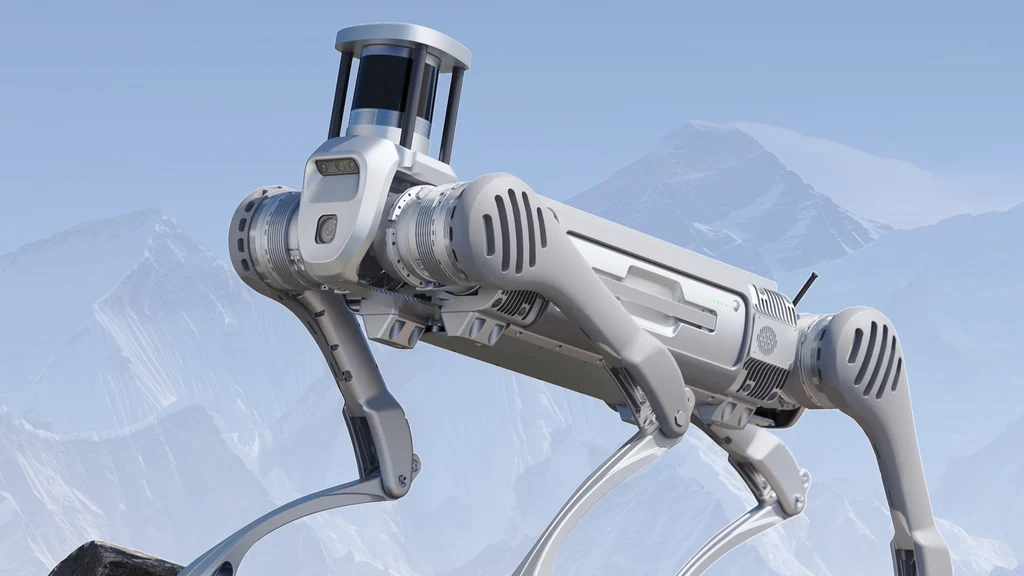
The company initially attracted international attention with its four-legged robots, which demonstrated unusually agile movement at a comparatively accessible price point.
It subsequently expanded into humanoid robotics with products including the G1, H1 and R1. The machines have gained significant online attention for demonstrations involving running, dancing, balancing and other highly dynamic movements.
Those demonstrations are useful marketing, but they are not the real commercial test.
The question facing Unitree now is much harder:
Can these machines perform useful work reliably, safely and economically?
That is where the humanoid robotics industry enters its next phase.
A robot that can perform an impressive demonstration for a few minutes is one thing. A robot that can operate for thousands of hours in a factory, warehouse, laboratory or commercial environment is something entirely different.
Unitree’s ability to bridge that gap will determine whether its current valuation looks visionary or aggressive.
Unitree Robotics Is Becoming an Embodied AI Company
The most interesting development around the IPO may actually be the connection between Unitree and China’s AI ecosystem.
DeepSeek, the Chinese AI company known for its foundation models, invested approximately 140.8 million yuan ($20.8 million) in Unitree through a strategic placement, acquiring a 2.31% stake. The companies also plan to collaborate on AI models and embodied-intelligence technologies.
This partnership matters because humanoid robots require more than motors and mechanical components.
They need intelligence.
A useful humanoid robot must be able to interpret its environment, understand instructions, recognise objects, plan movements and respond to unexpected situations.
That creates a natural intersection between AI model development and robotics.
DeepSeek brings AI expertise. Unitree brings mechanical engineering, motion control, robotic hardware and access to physical-world data.
Together, the companies represent a broader shift from generative AI to embodied intelligence.
China Robotics IPO Signals a New Investment Cycle
Unitree is also significant because it is becoming the first humanoid robot manufacturer to list on China’s mainland stock market.
That milestone could encourage other Chinese robotics companies to pursue public listings and larger capital raises.
The trend is already becoming visible.
Chinese humanoid robotics companies are increasingly preparing for public markets as they seek capital for expensive research, manufacturing and commercial deployment. Reuters has reported that other robotics players, including AgiBot and Leju Robotics, are also pursuing listing strategies.
That creates a new competitive landscape.
The robotics race will not be won solely by the company with the most advanced prototype.
Companies will need:
- Reliable hardware
- Efficient manufacturing
- Large training datasets
- Advanced motion-control systems
- Strong AI models
- Competitive pricing
- Commercial customers
- Global distribution
- Access to long-term capital
China has a potentially powerful advantage in several of these areas because of its enormous electronics and manufacturing supply chain.
Unitree’s Revenue Is Growing, But So Are the Risks
The company’s financial performance gives investors a reason to take the IPO seriously.
Unitree’s revenue increased more than fourfold in 2025 to around 1.7 billion yuan. Humanoid robots generated approximately 867.8 million yuan, overtaking the company’s four-legged robot business in revenue.
That is a remarkable shift for a company whose early international reputation was built around quadruped robots.
However, growth has not been completely smooth.
In the first quarter of 2026, Unitree’s revenue growth slowed to 68.5%, while adjusted profit fell 52.6% as the company increased spending on research and development and marketing.
That matters.
Humanoid robotics is capital intensive. Companies need to spend heavily before achieving the production scale that can potentially lower costs.
Unitree therefore faces a classic technology-company dilemma:
Invest aggressively today to create tomorrow’s market, while convincing investors that the spending can eventually translate into sustainable profits.
The Global Robotics Race Is Getting More Competitive
Unitree is not operating alone.
The company competes with international robotics businesses including Tesla and Boston Dynamics, while China’s domestic market is producing an expanding group of humanoid robotics companies.
The competitive battle is becoming particularly interesting because different companies are taking different approaches.
Some are focusing on industrial applications.
Others are concentrating on research and education.
Some are building consumer-oriented machines.
Others are attempting to create general-purpose humanoid platforms.
Unitree’s strategy has been closely associated with relatively affordable, commercially accessible robotics.
That could become an important advantage if humanoid robots eventually move beyond premium demonstrations and into mass deployment.
The Geopolitical Challenge Cannot Be Ignored
There is another dimension to the Unitree story: geopolitics.
The company’s IPO arrives as China and the United States continue to compete over advanced technologies, including AI, robotics and semiconductors.
Reuters has reported that Washington has introduced restrictions affecting certain foreign-made advanced robots, while Unitree has also faced U.S. scrutiny.
That could complicate international expansion.
The issue is particularly relevant because overseas markets already represent an important part of Unitree’s business. Reuters reported that more than 40% of Unitree’s sales came from overseas markets in 2025.
For Unitree, therefore, global growth is both an opportunity and a vulnerability.
A successful robotics company needs access to customers around the world. But increasingly fragmented technology rules could make international expansion more complicated.
Why Investors Are Watching Unitree Closely
Unitree’s valuation effectively puts a price on a future that has not fully arrived yet.
At roughly $9.04 billion, investors are betting that humanoid robotics can develop into a major commercial industry.
There are several reasons that optimism exists.
Factories are becoming more automated.
Labour shortages are increasing in some economies.
AI models are becoming more capable.
Robotic hardware is becoming cheaper.
China has enormous manufacturing capacity.
And advances in computer vision, sensors and motion control are making robots increasingly capable.
But there is still a substantial gap between technical demonstrations and widespread commercial adoption.
That gap may become the defining challenge of the next five years.
What Unitree’s IPO Means for Asian Startups
For Asia’s startup ecosystem, Unitree’s story has a broader lesson.
The region’s next generation of technology giants may not all be software companies.
They could emerge from robotics, semiconductors, industrial automation, advanced materials, batteries, manufacturing and physical AI.
This is particularly important for Asian startup markets because the region combines deep engineering talent with massive manufacturing ecosystems.
Unitree is an example of what happens when those capabilities converge.
The company began with robotics hardware, expanded into humanoid machines and is now entering the public markets at a valuation of more than $9 billion.
That trajectory is difficult to ignore.
What Comes Next for Unitree?
The IPO is not the finish line.
It may actually be the beginning of the harder chapter.
Unitree now has to demonstrate that its technology can move from viral demonstrations into repeatable commercial applications.
The company will need to scale production, improve robot intelligence, control costs, develop new products and defend its position against increasingly capable competitors.
Its collaboration with DeepSeek could also become strategically important if the two companies can combine AI models with real-world robotic data and hardware.
The long-term opportunity is enormous.
But so is the execution challenge.
Unitree IPO 2026: Key Facts
| Metric | Latest figure |
|---|---|
| IPO price | 150.8 yuan per share |
| Implied valuation | 61 billion yuan / $9.04 billion |
| Planned funds raised | 6.1 billion yuan / ~$904 million |
| New shares | 40.45 million |
| Public subscription | August 10, 2026 |
| 2025 revenue | ~1.7 billion yuan |
| 2025 humanoid revenue | ~867.8 million yuan |
| DeepSeek strategic investment | 140.8 million yuan / $20.8 million |
| DeepSeek stake | 2.31% |
| Headquarters | Hangzhou, China |
Sources: Reuters reporting on Unitree’s IPO pricing, financial performance, strategic investment and robotics strategy.
Frequently Asked Questions
What is Unitree’s valuation in 2026?
Unitree’s Shanghai IPO is priced at 150.8 yuan per share, implying a valuation of approximately 61 billion yuan, or $9.04 billion.
How much money is Unitree raising?
Unitree plans to raise approximately 6.1 billion yuan ($904 million) through its Shanghai IPO.
What does Unitree manufacture?
Unitree develops quadruped and humanoid robots. Its humanoid portfolio includes the G1, H1 and R1 models.
Why did DeepSeek invest in Unitree?
DeepSeek invested approximately 140.8 million yuan ($20.8 million) for a 2.31% stake and plans to collaborate with Unitree on AI models and embodied intelligence.
Why is Unitree important to China’s robotics industry?
Unitree is becoming the first humanoid robot manufacturer to list on China’s mainland stock market, giving investors a major public-market benchmark for the country’s emerging humanoid robotics industry.
The Bottom Line
Unitree’s IPO is bigger than a robotics listing.
It is a public-market vote on whether humanoid robots can become the next major technology platform.
The $9.04 billion valuation gives Unitree significant expectations to live up to. But it also gives China’s robotics industry something it has been missing: a highly visible public-company benchmark.
The next chapter will not be decided by how spectacular a robot looks on a stage.
It will be decided by whether that robot can work, learn, scale and create economic value in the real world.
And that is why Unitree’s move from robot demonstrations to a $9 billion public-market valuation could become one of the most important startup stories in Asia in 2026.
Stay Ahead of Asia’s Startup Economy
Unitree’s IPO is only one signal of how quickly Asia’s technology landscape is changing. From humanoid robotics and embodied AI to semiconductors, fintech, climate tech and deep technology, a new generation of Asian companies is reshaping where innovation and investment are heading.
Want to discover more of the startups, funding rounds and technology trends transforming the region?
👉 Explore the latest Asia startup news, companies and investment opportunities on BestStartup.Asia.